Order Block
The Simple Version
An Order Block is the last candle that went the opposite direction before a big move. It marks where the move started. Price often returns to this candle and bounces.
Identifying an Order Block
Find a strong move on your chart. Now look at the candle right before that move started. If the move went up, look for the last red candle before it. If the move went down, look for the last green candle before it.
That’s your Order Block.
Bullish Order Block: Last red candle before price shoots up. Bearish Order Block: Last green candle before price drops down.
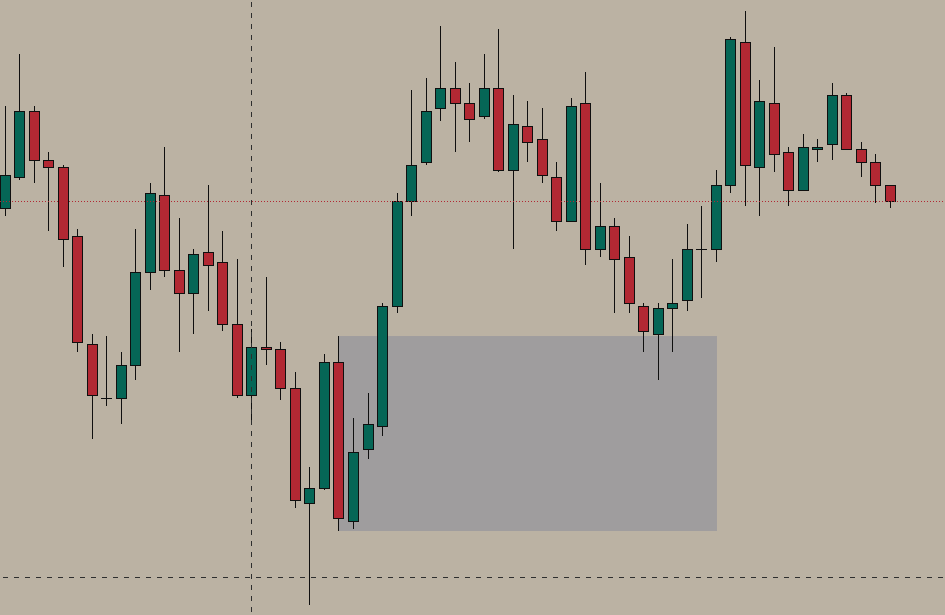 Bullish Order Block
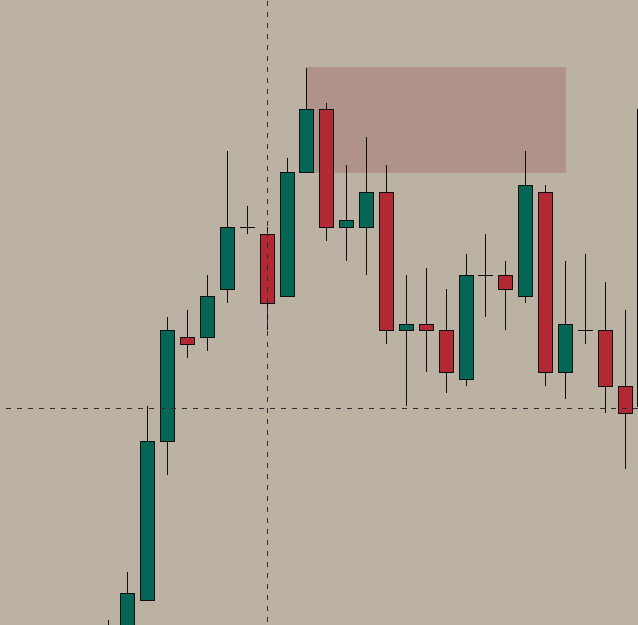 Bearish Order Block
Why It Works
Big players need to buy or sell large amounts. They can’t do it all at once without moving the market. So they accumulate positions in that last candle, then release the move.
When price comes back to that candle, those same players often defend their position. That’s why you get a reaction.
How to Mark an OB
- Find a strong, fast move (this is called displacement)
- Look left to the candle right before the move started
- That candle should close in the opposite direction of the move
- Mark the full candle (body and wicks)
- Note the 50% level of the candle (called mean threshold)
How to Trade It
Entry: Wait for price to return to the Order Block. Enter at the 50% level of the candle.
Stop: Beyond the Order Block.
Target: Previous swing high/low or next significant level.
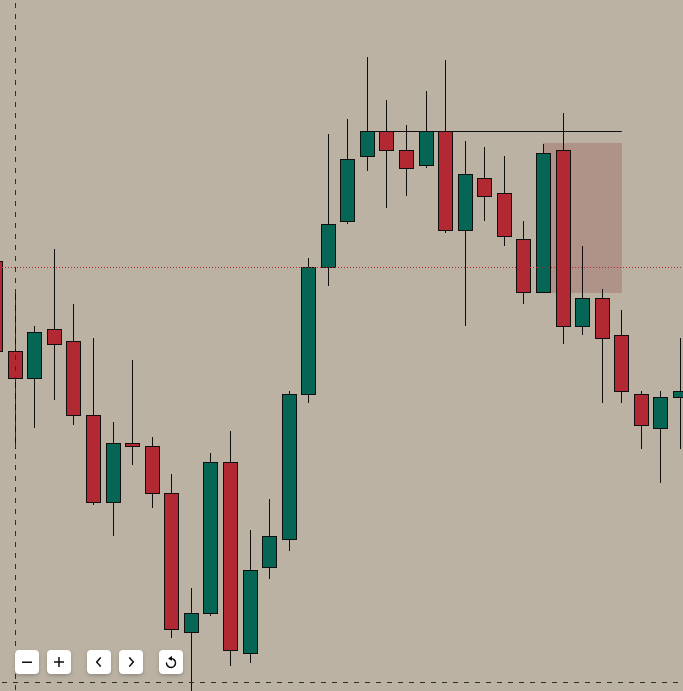 OB after Rejection Block reaction
When It Fails
An Order Block is invalid when price closes completely through it with a full candle body. At that point, it may become a Breaker Block (failed OB that now works in reverse).
If an Order Block gets tested 3+ times without a strong reaction, it’s losing power.
Quality Check
High-quality Order Block:
- One clean candle before the move
- Strong, fast move after it (displacement)
- First time being tested
- Aligns with the bigger trend
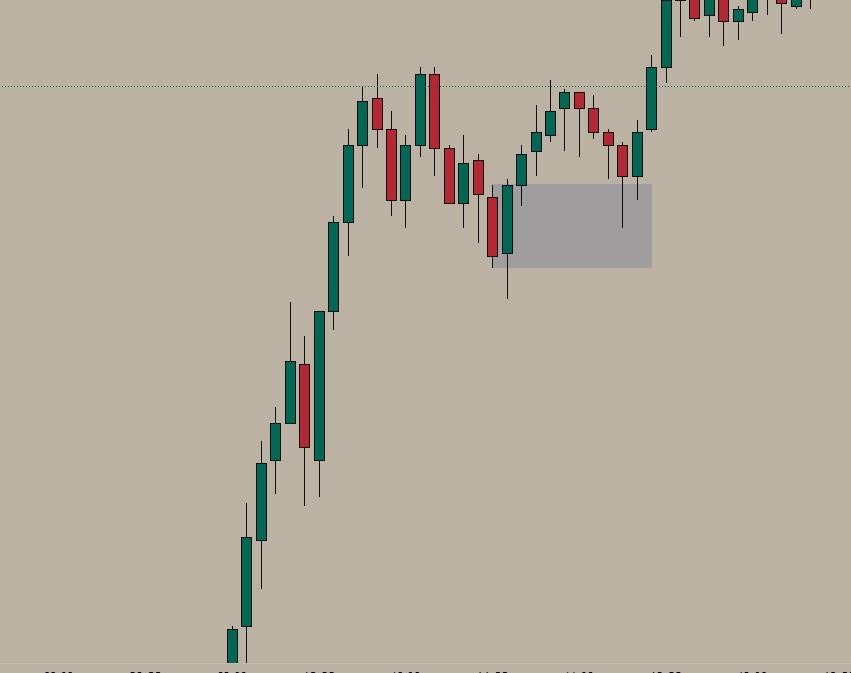 Bullish OB in a bullish trend
Low-quality Order Block:
- Multiple candles bunched together (unclear which one)
- Weak move after it
- Already tested several times
- Goes against the bigger trend
Common Mistakes
Marking candles without a strong move after. No displacement = no Order Block. The move after is what makes it valid.
Skipping the 50% level. Price often drives to the middle of the Order Block before reacting. Mark it.
OBs in the 2022 Model
Order Blocks on their own are just patterns. They have no statistical edge in isolation. What gives them power is context - when they align with a trading model.
Example: After a liquidity sweep and market structure shift, the Order Block becomes the entry mechanism. You’re not just trading a random OB - you’re entering after the trap is complete and direction is confirmed. The sweep + shift + OB combination is what creates the edge.
Quick Checklist
- Last opposing candle before a strong move
- Clear displacement after the candle
- Full candle marked (body and wicks)
- 50% level noted
- Aligns with your directional bias