Fair Value Gap (FVG)
The Simple Version
A Fair Value Gap is a gap between candle wicks. Price moved so fast that a space was left behind. Price tends to come back and fill that space.
What It Looks Like
Look at any three candles in a row. Check if the first candle’s wick touches the third candle’s wick. If there’s space between them, that’s your FVG.
The middle candle is the big one. It moved aggressively, leaving the gap.
Bullish FVG: Three candles going up. Gap is below the middle candle. Bearish FVG: Three candles going down. Gap is above the middle candle.
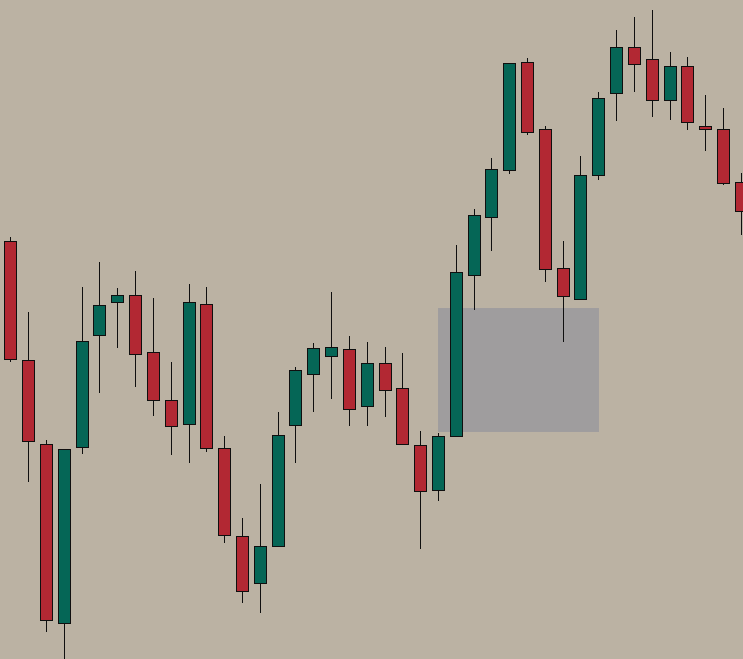 Bullish FVG
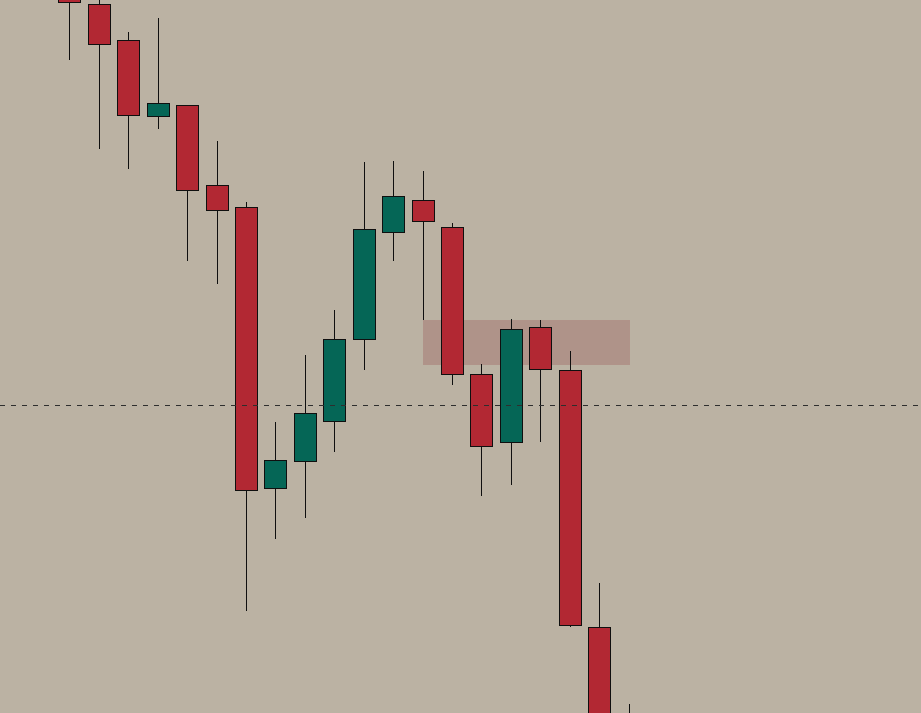 Bearish FVG holding
Why It Works
When price moves fast, it skips over price levels. Buyers and sellers didn’t get to trade at those prices. The market often returns to “fill” that gap, giving everyone a chance to participate.
Think of it as unfinished business. Price left too quickly and often comes back.
Spotting an FVG
- Look for a strong move (three candles minimum)
- Check: does candle 1’s wick touch candle 3’s wick?
- If NO, you have an FVG. Mark the space between those wicks.
- Note the 50% level of the gap (called Consequent Encroachment or CE)
How to Trade It
Entry: Wait for price to return to the FVG. Enter anywhere in the gap, edge or 50% level both work.
Stop: Beyond the gap.
Target: Next significant level in your direction.
When It Fails
An FVG is invalid when price closes completely through it. Not just wicks through, but a full candle body closes beyond. When that happens, stop expecting a reaction.
Old FVGs also lose power. If 20-40 candles pass and price hasn’t returned, the gap is stale.
Quality Check
High-quality FVG:
- Strong, fast move created it
- Formed during London or New York session
- Fresh (price hasn’t retested it yet)
- Aligns with the bigger trend
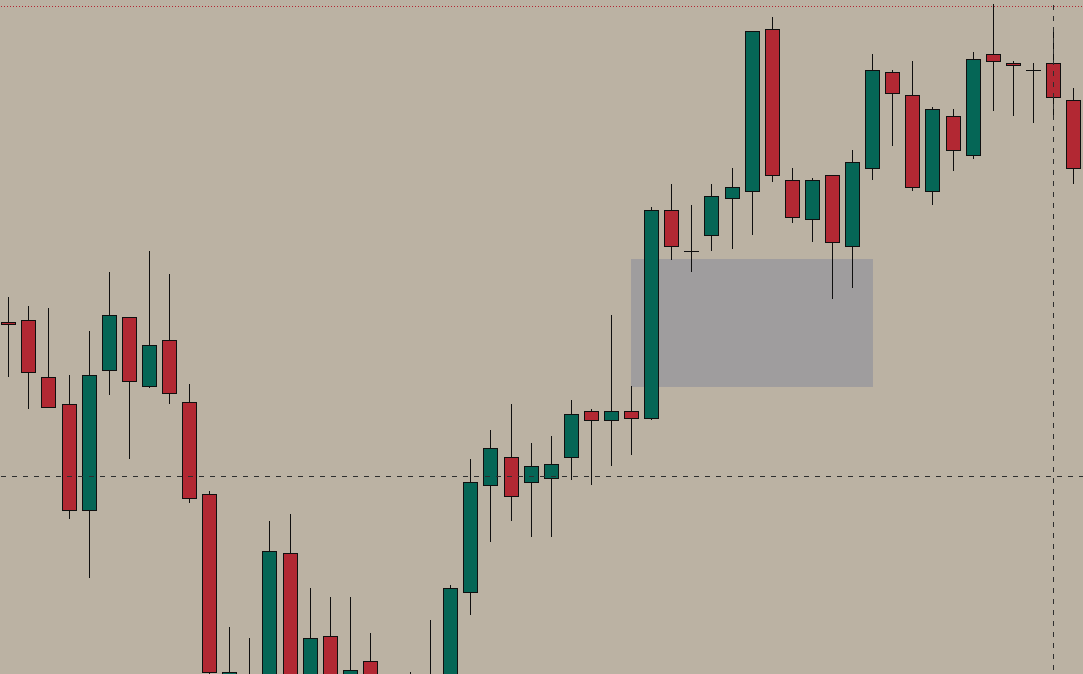 Big bullish FVG with clear displacement
Low-quality FVG:
- Weak, slow move
- Formed during Asia or lunch hour
- Already tested multiple times
- Goes against the bigger trend
Common Mistakes
Trading every gap you see. Most FVGs are noise. Focus on gaps that form during active sessions and align with the trend.
Obsessing over edge vs 50% entry. Both work. Price reacts randomly within the gap. Pick one approach and stick with it.
Trading stale gaps. Old FVGs lose relevance. Focus on fresh ones.
FVGs in the Silver Bullet
FVGs on their own are just patterns. They have no statistical edge in isolation. What gives them power is context - when they align with a trading model.
Example: The 10-11am ET window often produces FVGs as the true daily direction emerges. Morning manipulation creates gaps in one direction, then the real move begins. FVGs formed during this window, aligned with the new direction, become high-probability entries.
Quick Checklist
- Space exists between candle 1 and 3 wicks
- Middle candle shows strong movement
- Gap is fresh (not stale)
- Aligns with your directional bias
- 50% level marked