Breaker Block
The Simple Version
A Breaker Block is an Order Block that failed. Price closed through it instead of bouncing. Now it works in the opposite direction. What was support becomes resistance. What was resistance becomes support.
What It Looks Like
Find an Order Block that held before. Now look for price to close completely through it with a full candle body. That broken Order Block is now a Breaker Block.
Bullish Breaker: A bearish Order Block that got broken. Now it acts as support. Bearish Breaker: A bullish Order Block that got broken. Now it acts as resistance.
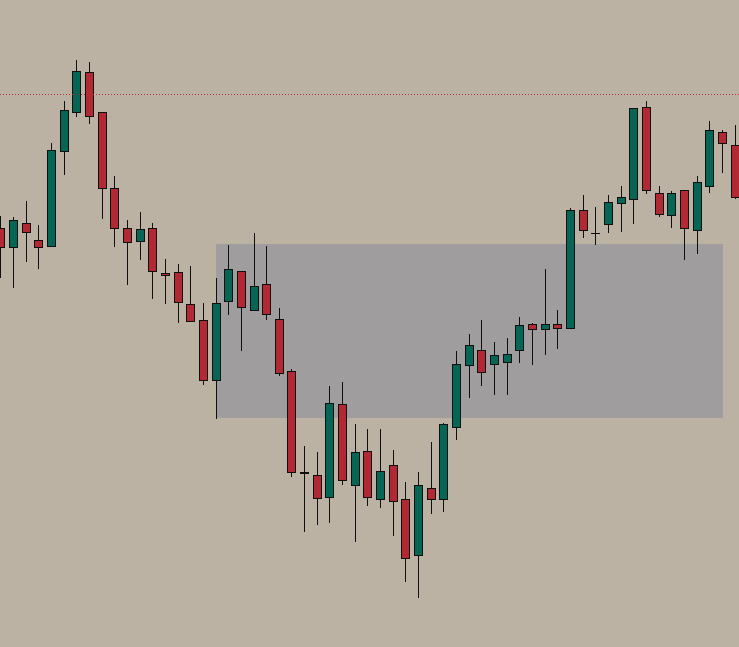 Bullish Breaker Block
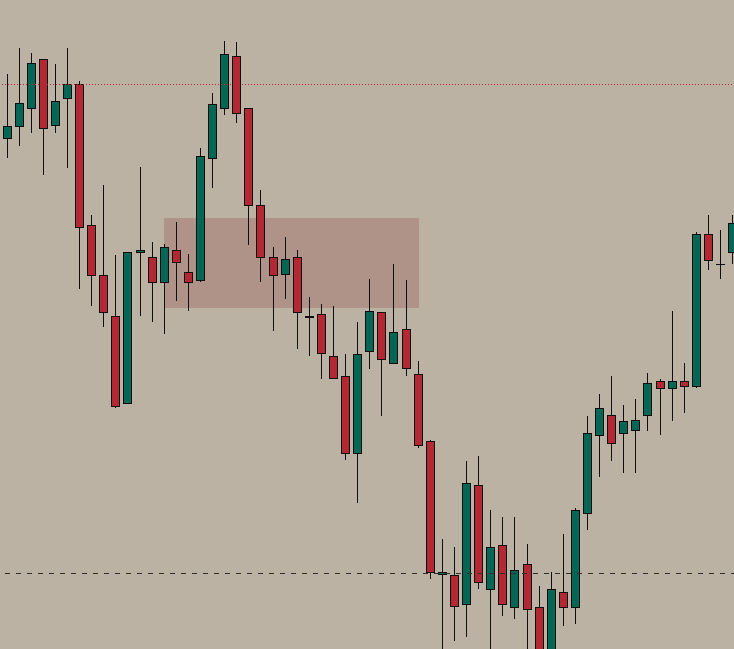 Bearish Breaker Block
The Logic Behind Breakers
Traders who bought at the original Order Block are now underwater. Their stop losses get triggered. This creates fuel for the move in the new direction.
When price returns to the Breaker, those same levels now work in reverse. Failed support becomes resistance because traders who got burned there won’t make the same mistake twice.
How to Find It
- Identify an Order Block that was holding
- Wait for price to close through it with a full body (not just a wick)
- That broken zone is now your Breaker Block
- Mark it with the opposite bias
How to Trade It
Entry: Wait for price to return to the Breaker Block. Enter at the zone.
Stop: Beyond the Breaker Block.
Target: Next significant level in the new direction.
Bonus: If there’s a Fair Value Gap overlapping the Breaker Block, that’s called a Unicorn setup. Higher probability.
When It Fails
A Breaker Block is invalid when price closes back through it in the original direction. This means the “break” wasn’t real.
If the original Order Block was weak to begin with, the Breaker won’t be strong either.
Quality Check
High-quality Breaker:
- Original Order Block was clean and held multiple times
- Strong move through it (displacement on the break)
- First retest after the break
- Unicorn setup (FVG overlap) is a bonus
Low-quality Breaker:
- Original Order Block was weak
- Slow grind through instead of displacement
- Already tested multiple times after breaking
- Against the new trend direction
Common Mistakes
Treating every broken level as a Breaker. The original zone must have been a valid Order Block first.
Entering immediately on the break. Waiting for a retest often gives better risk-to-reward, though some traders successfully enter on the break itself.
Ignoring the bigger picture. A 5-minute Breaker against the 1-hour trend usually fails.
Breakers as Turtle Soup
Breaker Blocks on their own are just patterns. They have no statistical edge in isolation. What gives them power is context - when they align with a trading model.
Example: The failed Order Block trapped traders. Their stops became fuel. The Breaker Block setup IS a Turtle Soup - you’re fading the failure, entering in the new direction after the trap is complete. The broken OB + displacement + retest combination is what creates the edge.
Quick Checklist
- Original Order Block was valid
- Full body closed through it
- Strong move on the break
- Waiting for retest
- Check for Unicorn (FVG overlap) as bonus